APPLICATION LOAD PROFILES
Generator selection begins with connected and starting loads, transfer sequence, fuel strategy, acoustic limits, runtime expectations, and the electrical distribution system that must accept the source.
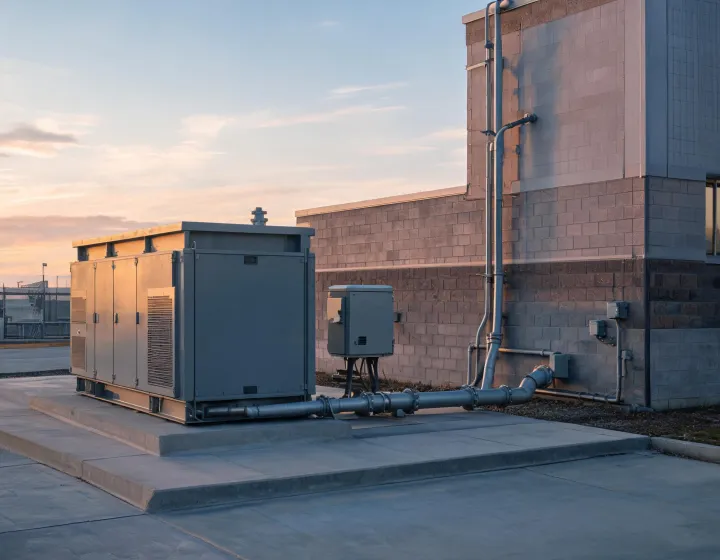
Life-safety branches, clinical loads, elevators, HVAC, refrigeration, and communications may transfer in controlled steps rather than simultaneously. The engineering record identifies legally required circuits, acceptable interruption time, motor starting demand, nonlinear loads, fuel autonomy, testing access, and local emissions or sound requirements. The generator rating, transfer equipment, grounding method, and selective coordination study must be evaluated as one system.
UPS input characteristics, harmonic content, cooling infrastructure, redundant distribution paths, block loading, and recovery sequencing govern generator response. A nameplate total does not describe step-load behavior or power-factor conditions. Monitoring points should expose engine state, alternator output, breaker position, alarms, fuel level, battery condition, transfer events, and maintenance status without weakening the site cybersecurity boundary.
Mixed lighting, pumps, air handling, fire protection, access control, tenant systems, and commercial kitchens create competing priorities. The load schedule separates emergency, legally required, optional standby, and load-shed groups. Installation planning includes enclosure access, service clearance, exhaust routing, fuel storage, weather exposure, noise at the property boundary, and coordination with the serving utility and authority having jurisdiction.
Pumps, compressors, conveyors, process controls, and environmental systems can impose high starting current and strict restart sequences. Engineers compare across-the-line starting, soft starters, variable frequency drives, staged loading, and conservative derating for ambient temperature or altitude. The inquiry should include motor data, duty cycle, voltage and frequency, short-circuit contribution, transfer arrangement, enclosure rating, and expected continuous runtime.
Share normal and emergency source voltage, phase, frequency, connected loads, largest motor, step sequence, transfer method, fuel preference, site conditions, monitoring requirements, and destination standards. We will identify the remaining questions before configuration and pricing.
Review My Application